How to Select and Maintain Hydraulic Pumps and Cylinders
Hydraulic pumps and cylinders are the heart and force applicator of every hydraulic system. They work in tandem to deliver extreme actuating and linear power, wherever it’s needed. Nearly every demanding industry uses hydraulic power, either in its machinery or in its processes. That includes the following industries:
- Aerospace
- Construction and foundation repair
- Automotive
- Demolition
- Oil & Gas
- Energy
In short, any industry that requires heavy lifting, pushing, pulling, grinding, pulverizing or positioning requires hydraulic power to some extent, and we have the equipment that’s needed for the job.
What are Important Considerations when Selecting Hydraulic Pumps and Cylinders?
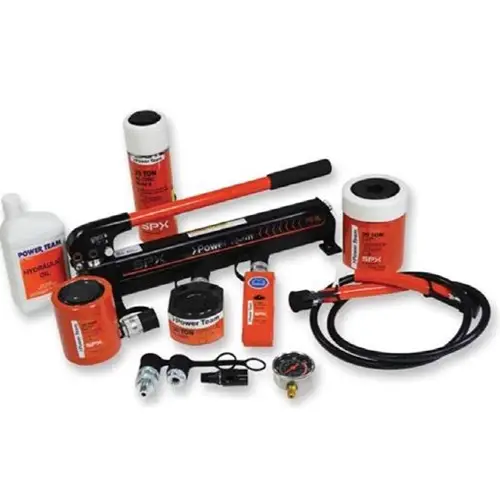
If your operations rely on hydraulic pumps and cylinders to function, it’s important to pick the right hydraulic pump or cylinder for your application. That means considering the following specifications when selecting a pump:
- Operating pressure – Can the hydraulic pump handle your equipment’s operating pressure requirements? Too much pressure is a waste of energy, while too little pressure will reduce performance, cause overheating and may result in safety issues. Hydraulic system pressure requirements are based on complex math, as the load-induced pressure must be added to resistance induced pressure drops (from valves, filters, etc.). You’ll also need to add in an additional 5-10 percent for safety purposes.
- Flow rate – Flow rate determines how fast the motors will operate and how fast any cylinders will actuate. It’s calculated by multiplying the cylinder’s volume by the number of cycles per minute, which is a system specific configuration.
- Duty cycle compatibility – Verify that the hydraulic pump you’re considering is compatible with the duty cycling that your application will require. Not all hydraulic pumps are designed for continuous, heavy-duty cycling. Determine whether your application calls for intermittent cycling, or if heavy loading and cycling are necessary.
- Certifications – There are multiple certifications that indicate the hydraulic pump is hardened against environmental hazards like dust and moisture. Look for hydraulic pumps with a sufficient IP rating, NEMA enclosure rating, UL listing for electrical safety and pumps that are rated for safety when combustible dust is present.
If you’re in the market for a hydraulic cylinder, these are the important specifications to consider:
- Loading capacity and force requirements – Your hydraulic cylinder must deliver sufficient force, in terms of tonnage. Consider the maximum lifting, pushing, pulling or clamping force required in your application. Consider normal loading conditions and peak loading conditions. Add in a safety margin for shock loads.
- Rod and bore size – Bore size influences force application, but a larger bore diameter requires more hydraulic fluid, a larger pump, slower cycle times and a larger footprint. You’ll typically see expanded bore sizes on excavators, cranes, compactors, demolition equipment and heavy-duty presses. Rod diameter affects the cylinder’s durability and in demanding applications, oversized and reinforced rods are recommended.
- Stroke length – Stroke length must be precisely matched to the application, which depends on space and linear distance requirements. Too little stroke will cap the hydraulic cylinder’s performance. Too much stroke and the risk of rod deflection increases.
- Operating pressure rating – Your hydraulic cylinder must match your system’s operating pressure requirements. This includes the system’s maximum operating pressure, burst pressure and must account for any pressure spikes or valve settings. If your hydraulic cylinder can’t handle the system’s pressure requirements, it can lead to barrel failure, rod damage or seal extrusion.
- Mounting style – There are multiple types of hydraulic cylinder mounts, and your hydraulic cylinder must be compatible with the mount that your system will require. This could be a clevis mount, a flange mount, a trunnion mount or another less common type.
What Does Hydraulic Pump and Cylinder Preventative Maintenance Include?
Hydraulic pumps and cylinders operate with maximum efficiency when companies invest in preventative maintenance. That preventative maintenance should include:
- Fluid service – Fluid service includes checking fluid levels and hydraulic fluid quality. Hydraulic fluid quality is important as it may indicate contamination if quality drops. Hydraulic fluid contamination will interfere with the fluid’s properties, including its flow rate and operating temperature. During fluid quality checks, your fluid will be assessed in a lab for any microcontaminants.
- Leak inspections – Hydraulic fluid leaks may be internally or externally located, and both increase the risk of damage to your system. Internal leaks cause bypass and reduce power output. External leaks may allow contamination to ingress into the system. During leak inspections, your technician will look for any signs of a leak, including fluid residues or reduced fluid levels.
- Filter checks – Hydraulic system filters are critical for protecting your equipment from contamination and accelerated component wear. Filters must be occasionally switched out or cleaned.
- Rod inspections – During rod inspections, the hydraulic cylinder’s rod is checked for any signs of corrosion, scoring or deflection. If any are present, the rod will need to be switched out to remove risk of a catastrophic failure.
- System calibration – Sometimes, a hydraulic system may be miscalibrated due to changes in application demands or because an operator alters system settings without informing anyone else. During preventive maintenance, your technician will ensure your hydraulic pumps and cylinders are properly calibrated.
- Troubleshooting – If your hydraulic pump or cylinder is outputting limited power, if unusual sounds or odors are present during operation or if components are wearing out faster than expected, we provide hydraulic services to troubleshoot the underlying issue.
How Can a Hydraulic Equipment Supplier Help Select Hydraulic Pumps and Cylinders?
Hydraulic equipment suppliers can be a vital service partner for any companies operating in demanding industries. If you’re partnered with a knowledgeable hydraulic equipment supplier like us, your business will benefit in the following ways:
- Access to quality hydraulic pumps and cylinders – If you’re partnered with a hydraulic equipment supplier, they will be ready to deliver top-brand hydraulic pumps and cylinders as needed. Whether it’s because your operations are expanding or because you’ve lost a critical piece of equipment to a technical issue, a replacement or new piece of equipment will be available.
- Access to on-time, expert preventative maintenance – Hydraulic equipment suppliers can also be your maintenance partner, delivering essential maintenance services on time. This includes fluid service, equipment inspections, leak inspections and more.
- Access to replacement hydraulic system components – If one of your hydraulic pumps or cylinders goes out of commission, your hydraulic equipment partner can quickly provide a serviceable replacement. That way, your operations won’t be crippled by expensive downtime.
Together, these benefits can add up to considerable value for your operations. With a reliable hydraulic technology partner like Flickinger Machine, your company will optimize its hydraulic pumps and cylinders’ uptime, performance and overall value.
Frequently Asked Questions
Operating pressure comes first, since the pump has to handle your equipment’s pressure requirements. From there, check flow rate, duty cycle compatibility and the certifications that show the pump is hardened against environmental hazards.
Loading capacity and force requirements lead the list, followed by rod and bore size, stroke length, operating pressure rating and mounting style. Account for peak loading and add a safety margin for shock loads.
Fluid service, leak inspections, filter checks, rod inspections, system calibration and troubleshooting. Pumps and cylinders operate with maximum efficiency when that maintenance happens on schedule.
A supplier partnership gives you access to quality hydraulic pumps and cylinders, on-time expert preventative maintenance, and replacement components when something goes out of commission.