
Hydraulic Cylinders For Sale, Service & Repair
Single & double acting, center-hole, locking, low-profile and load-return cylinders for every push, pull and lift.
Explore Hydraulic Cylinders
Shop by Sub-Category


When You Need A Push Or A Lift, Hydraulic Cylinders Are Ready To Work
Hydraulic cylinders are the pushers, pullers, and lifters of the construction industry, responsible for applying linear force where it’s needed. The engineering behind hydraulic cylinders is simple but extremely effective, which is why they have been used for decades in many industries.
Hydraulic cylinders are unmatched in their ability to apply linear force, and cylinder manufacturers produce a massive array of cylinder designs for just about any application. This includes compact cylinder designs for mobile, in-the-field tasks.
How Does A Hydraulic Cylinder Work?
The science of hydraulics has been around since the 18th century, and hydraulic cylinders are based on the same principles discovered hundreds of years ago.
The idea is simple. During operation, fluid (typically hydraulic oil) is pumped into one side of the cylinder barrel. In a single-acting cylinder, this is always the cap end. When oil is pumped into the cap end, the pressurized fluid pushes on the piston head and forces the rod out. This creates linear mechanical force. The piston is then retracted using a spring, which keeps the piston’s movement steady and aligned. Alternatively, a double-acting cylinder uses the same hydraulic oil to push the piston back into place.
In both designs, the piston head separates the cap end from the gland end, so hydraulic oil doesn’t flow between the two. O-rings and seals also prevent oil from escaping from either end.
What Are Hydraulic Cylinders Used For?
Hydraulic cylinders are both effective and versatile. They’re so effective and versatile, in fact, that you can’t go outside without seeing one eventually. Some of the most common hydraulic cylinder applications include:
Heavy construction machinery
Things like excavators, back hoes, bulldozers, dump trucks and graders all require hydraulic cylinders to actuate and generate mechanical power. Hydraulic cylinders are also used in pavers and concrete pumps.
Industrial machinery
Multiple industries utilize hydraulic cylinders in their processing and manufacturing equipment. Some examples include presses, benders, and cutting machines. Automated production lines are also driven by hydraulic cylinders.
Aircraft and aviation
Hydraulic cylinders are used in some forms of aviation equipment, including wing flaps and landing gear. Hydraulic cylinders may even be incorporated into sophisticated aviation simulators to create movement.
Foundation repair
Hydraulic cylinders are also necessary for foundation repair. They’re typically used to lift the foundation so steel or concrete piers can be driven into the ground. The cylinders keep the foundation supported while caps are added to the top of the piers. Once the caps are in place, the hydraulic cylinders can be removed.
What’s The Difference Between A Single-Acting And Double-Action Cylinder?
As already mentioned, single-acting cylinders work when oil is pumped into the cap side, pushing the rod out of the other end. A spring, integrated inside the cylinder barrel, is used to reset the piston’s position and retract the rod.
In a double-action cylinder, hydraulic oil is used to push and reset the piston rod, so no spring is required.
What difference does this make in application? Single-acting cylinders are excellent at applying pushing force, but that’s the only kind of force they can apply. Double-action cylinders can apply both pushing and pulling force, on the same stroke if needed.
Single-acting cylinders tend to be less expensive and are easier to maintain due to their simplicity. Double-acting cylinders are more complex, but they’re more versatile and allow for more controlled retraction. Double-action cylinders also have no internal springs, which can wear out during operation.
A Few Important Features To Look For In Hydraulic Cylinders
There is an incredible variety of hydraulic cylinders on the market, built for a variety of applications. If you’re searching for a cylinder for your application, here’s a few features to target:
Durability-enhancing features
Hydraulic cylinders are subjected to intense internal pressures and exposure to corrosive chemicals. You’ll need a cylinder that can hold up under that so it won’t fail during operation.
The cylinder body itself should be as tough as possible, and the most durable ones are made from solid steel. Chrome plating on internal components like the piston head will reduce corrosion and wear, extending the life of your cylinder. Some cylinders are also built with internal bearings designed to compensate for off-center loads and reduce wear.
The cylinder’s collar is particularly susceptible to wear and damage, so some manufacturers add removable rubber boots to their cylinder collars. This keeps the collars protected from damage during transport or storage.
Finally, pick a cylinder with a high burst pressure, one that is well above the expected operating pressure range of your application.
Usability-enhancing features
In the field, you’ll probably need to attach a variety of fixtures or accessories to the hydraulic cylinder. Ideally, all of your hydraulic cylinders will be able to attach to the same fixtures, so target cylinders that are standardized in build. Reputable manufacturers offer entire lines of cylinders that share the same collar design, so they can all be fitted into the same accessories.
Some manufacturers also standardize their base mounts to make it easy to switch out one cylinder for another. Look for a wide tonnage range, too, as this will give your crew additional capabilities in the field. Some cylinder model series are standardized and available in a range of tonnages, so you’ve got a deep box of tools for any lifting job.
Our Team Can Match The Right Cylinder To Your Application
There are hundreds of hydraulic cylinder models available for hundreds of applications. It can be a challenge sorting through them and picking the perfect one for your team, which is why our team is ready to help. Flickinger Machine has decades of experience in servicing, repairing, and supplying hydraulic cylinders, so we know which cylinder to pair with your job.
Frequently Asked Questions
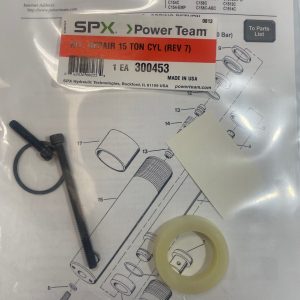
Most can be repaired. Seals, o-rings and springs are wear items, and they are the usual reason a cylinder starts leaking or stops holding pressure. Repair kits are available for the common tonnages. A cylinder is normally past repair when the barrel or the rod is scored, bent or corroded badly enough that new seals will not seat against it. Bring it to our South Houston shop and we will tell you which case you are in.
At our shop at 405 Nebraska in South Houston, open Monday through Friday, 7:30am to 4:30pm CT. Flickinger Machine has decades of experience servicing, repairing and supplying hydraulic cylinders, and we stock the repair kits and replacement parts for the cylinders we sell. Call 832-671-0978 to arrange a repair.
In a single-acting cylinder, oil is pumped into the cap end and pushes the rod out. An internal spring resets the piston and retracts the rod. In a double-acting cylinder, oil pushes the piston in both directions, so no spring is needed. Single-acting cylinders only push. Double-acting cylinders push and pull, and can do both on the same stroke if the job calls for it. Single-acting units cost less and are simpler to maintain. Double-acting units are more versatile and offer controlled retraction with no internal spring to fail.
Match tonnage and stroke to the load and the distance it has to travel, then look at how the cylinder is built. A solid steel body and chrome-plated internals stand up to the pressure and corrosion these tools live in. A burst pressure well above your working range is what keeps a cylinder from failing under load. Then check standardization: cylinders in the same series share collar and base mount designs, so one set of fixtures fits the whole range and you can change tonnage without rebuying accessories.
Anywhere linear force has to be applied. Heavy construction machinery uses them in excavators, backhoes, bulldozers, dump trucks, graders, pavers and concrete pumps. Industrial machinery uses them in presses, benders, cutting machines and automated production lines. Aviation uses them in wing flaps and landing gear. Foundation repair uses them to lift a foundation while steel or concrete piers are driven and capped.
The pump has to reach the pressure the cylinder is rated for, move enough oil to give you a workable stroke speed, and sit on a reservoir big enough to fill the cylinder at full extension. Two-speed hand pumps move a large volume at low pressure to close the gap quickly, then shift to a smaller volume at high pressure once the load is engaged, which is why they feel much faster on a long stroke.
Keep Exploring
Related Pages
Single-Acting Cylinders
The workhorse cylinder for straightforward lifting and pressing.
Double-Acting Cylinders
Hydraulic power on both the advance and the return stroke.
Center-Hole Cylinders
Hollow-plunger cylinders for pulling, tensioning and cable work.
Low-Profile Cylinders
Big tonnage in a short body for tight vertical clearance.
Cylinders by Type
Every cylinder type we carry, compared side by side.