Hydraulic Equipment Parts Every Crew Should Have on Hand
No matter where your work crews operate or what their mission is, if they rely on hydraulic equipment to get the job done, they’ll need to have an array of hydraulic components on hand for maintenance purposes. Hydraulic systems are subjected to intense stresses, so the occasional failure will happen. If your crews have the following hydraulic equipment parts on hand, they may be able to minimize downtime and ensure work doesn’t stop:

Your hydraulic equipment supplier can identify the right parts for your operations and supply you crews with replacement components before they are needed. As today’s supply chains are stressed, it’s important that every crew prioritize their parts inventory. If you wait until a breakdown occurs, it will take longer and cost more to get your equipment back up and running.
What Hydraulic Equipment Parts Should Every Crew Have Available in the Field?
If one of your hydraulic systems experiences a major breakdown such as a leak from the equipment body or an inability to deliver consistent power, a hydraulic equipment technician will likely need to get involved. However, there are many routine issues that can be addressed with the right replacement part and a modest amount of know-how. Those replacement parts include:
Hydraulic Hoses
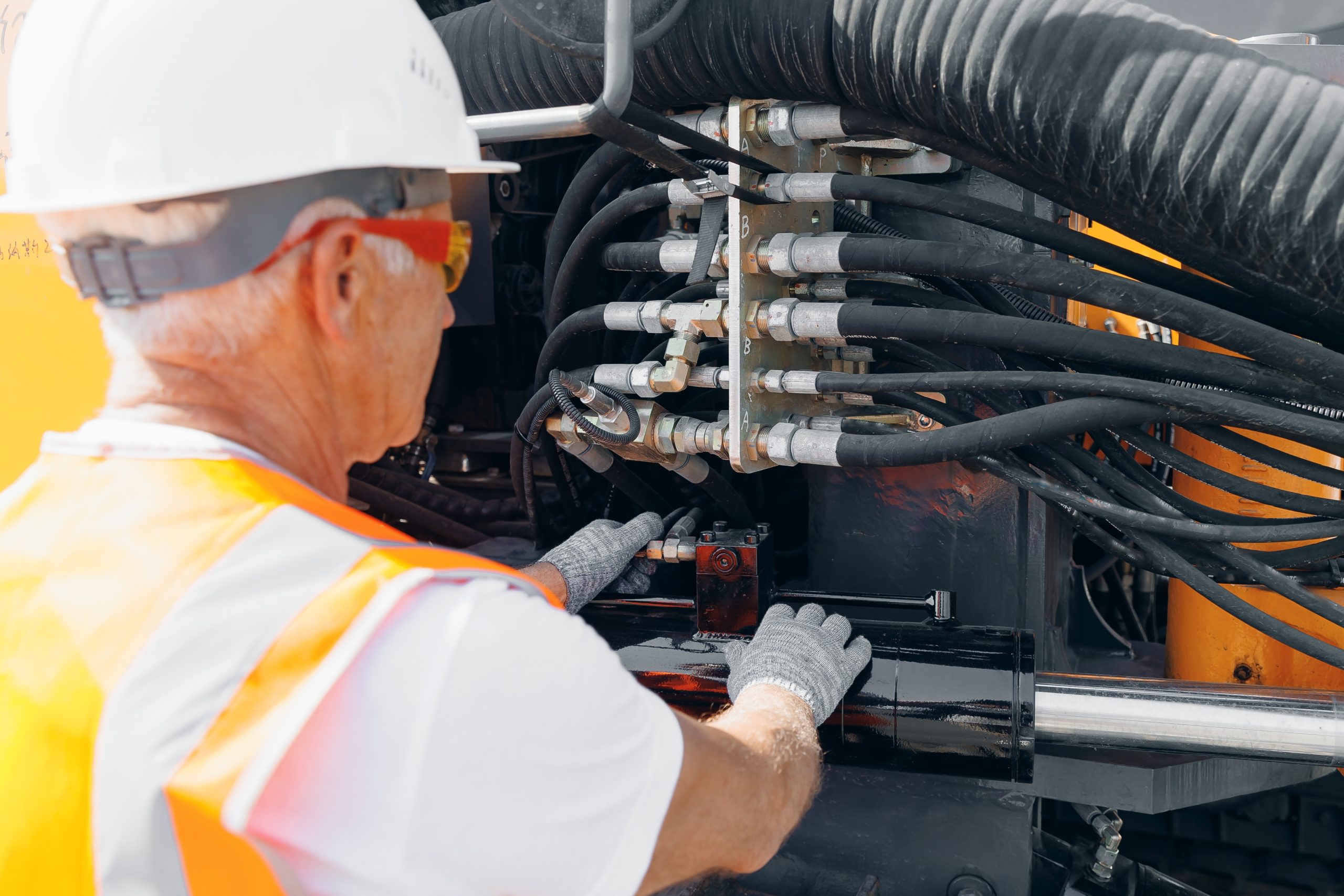
Hydraulic hoses are a primary failure point for nearly every application. They’re subjected to abrasion, impact and consistent exposure to airborne contaminants, including dust and water. These can lead to tears and punctures, and if a hydraulic hose blows during operation, it will bring everything to a sudden halt.
To ensure your hydraulic lines remain intact, your crews should have backup hydraulic hoses on hand. This includes hydraulic hoses in several standard inner diameters (from 1/4-inch to 3/4-inch), and hydraulic hoses that are abrasion resistant.
Hydraulic fittings and couplers
Hydraulic hoses are a common failure point, but hydraulic fittings and couplers may fail before a hose, as they are subjected to constant vibration and can be worn down by frequent connecting and disconnecting. Like with hydraulic hoses, a failed fitting or coupler can result in persistent fluid leak that stops operations.
That’s why crews should have a collection of hydraulic couplers and fittings on hand, including quick-connect couplers, straight/elbow/tee couplers and NPT/JIC fittings.
Hydraulic seals and gaskets
Hydraulic seals and gaskets are yet another common failure point, as they’re the first line of defense against dust, moisture and other contaminants, and because they’re made with less durable materials than the critical components they’re designed to protect.
When a hydraulic seal or gasket fails, hydraulic fluid contamination will soon follow, and you’ll likely notice disruptions in power delivery as well. To prevent this from happening, keep backup rings, O-rings, rod seals and piston seals on hand that are designed for your hydraulic pumps and cylinders.
Hydraulic filters
Hydraulic filters keep your hydraulic fluid clean and flowing properly, so if they become overly soiled, it will likely result in flow obstructions and hydraulic contaminants leaching into the fluid. To keep your hydraulic fluid in good operating shape, keep extra replaceable in-line filters on hand, as well as additional breather caps and suction strainers.
Hydraulic valves
Your hydraulic system’s valves are the flow controllers for your hydraulic fluid, and they are sensitive to issues with your system’s calibration or design. Further, hydraulic valves may be compromised by hydraulic fluid contamination, alterations in the fluid’s flow properties, overheating, electrical issues (for solenoids) and wear due to frequent cycling. If a hydraulic valve fails, it will affect your entire system’s flow and may cause dangerous, pressure related issues.
That’s why work crews should have spare hydraulic valves on hand, including pressure relief valves, directional control valves and check valves.
Hydraulic gauges and diagnostic tools
Hydraulic gauges and diagnostic tools, like flow meters and test fittings, are valuable for monitoring system performance and catching emerging issues before they cascade into catastrophic failures. It’s a good idea to keep extra gauges and diagnostics on hand to ensure your hydraulic system can be checked when needed.
Hydraulic clamps and brackets
Hydraulic clamps and brackets stabilize your equipment during operation and prevent damage due to vibration. They may wear down due to exposure to vibration and abrasion, but it’s important to switch them out as soon as they begin failing, as they prevent that vibration from damaging hydraulic lines and other equipment components. Make sure your crews have additional hose clamps, line brackets and isolation mounts on hand to protect sensitive hardware.
Hydraulic pumps (for critical applications)
Hydraulic pumps may seem like an extreme example here. You wouldn’t normally consider a full hydraulic pump to be a replacement component, but in critical applications and at remote worksites, it’s worth the cost to keep an extra hydraulic pump or two on hand for your hydraulic power units. Replacing a hydraulic pump without one on hand is extremely costly in terms of money and time, so it’s wise to consult with your hydraulic equipment supplier to determine which pump models are best for your application.
Protect Your Hydraulic Equipment by Keeping Replacement Parts on Hand
Hydraulic equipment will eventually experience a failure, and sometimes that failure occurs in the field, where there’s minimal access to expert maintenance. If your crews have access to essential replacement parts like hydraulic hoses, fittings, seals, filters, valves, gauges, they’ll be able to respond to any routine failures efficiently, ensuring your operations (and productivity) aren’t derailed
Reach out to a reputable hydraulic equipment supplier to access replacement parts to keep your equipment up and running and keep your crews productive.
Hydraulic equipment will eventually experience a failure, and sometimes that failure occurs in the field, where there’s minimal access to expert maintenance. If your crews have access to essential replacement parts like hydraulic hoses, fittings, seals, filters, valves, gauges, they’ll be able to respond to any routine failures efficiently, ensuring your operations (and productivity) aren’t derailed.
Reach out to a reputable hydraulic equipment supplier to access replacement parts to keep your equipment up and running and keep your crews productive.